
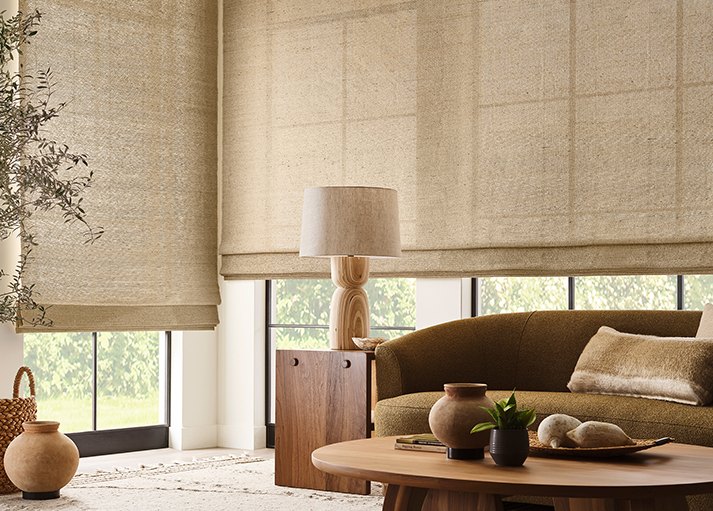
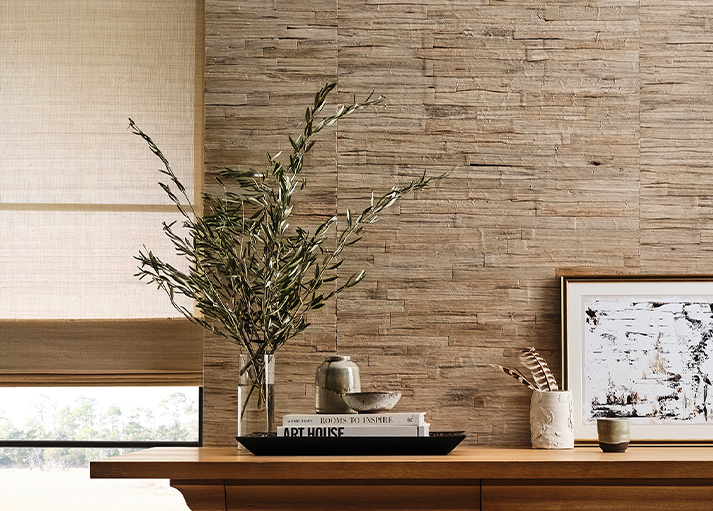

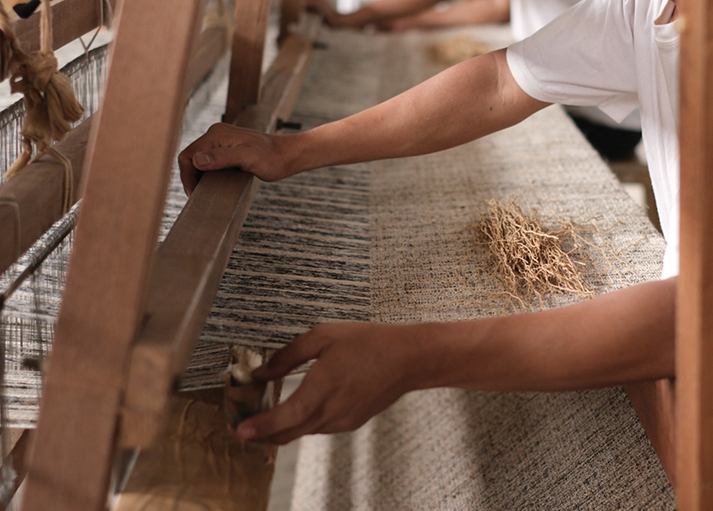



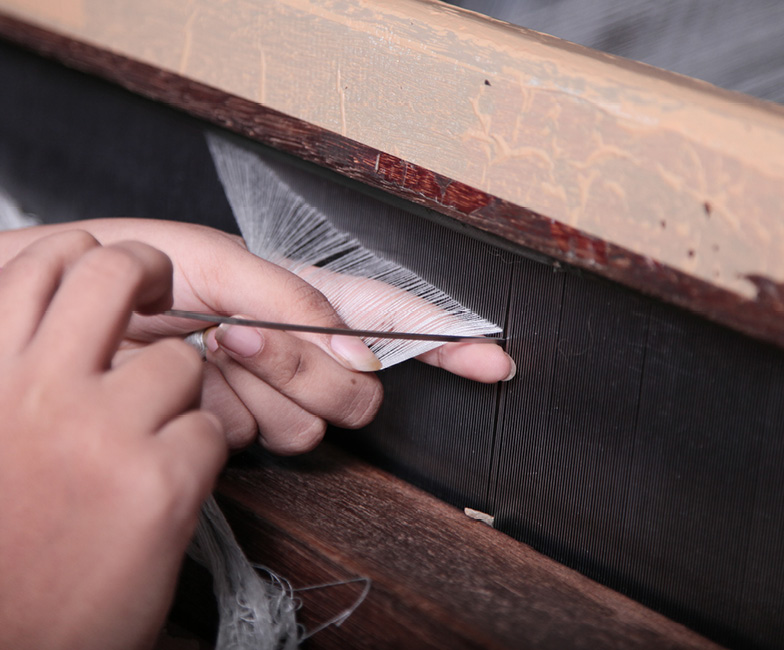

Abacá
A durable natural fiber harvested from the leaf stalks of the abacá plant, a species in the banana family. Also known as banana hemp, abacá is prized for its fine texture, natural luster, and exceptional strength.

Arrowroot
Harvested seasonally from the inner stalk of a tropical climbing vine, arrowroot is a delicate fiber known for its limited availability and artisanal appeal. Lightweight with a subtle sheen and silky texture, it brings an airy, luminous quality to woven designs.

Bamboo
A fast-growing tropical grass with hollow, woody stems. In its natural form, mature canes are used to craft furniture and window coverings. The outer husk and inner fibers can be processed and spun into thread, offering a versatile material prized for both its strength and sustainability. LEARN MORE

Bamboo Husk
Also known as bamboo sheath or shoot skin, this natural covering wraps around the joints of the bamboo culm (stem). Once harvested, the husk is split into fine strips and twisted or braided into strong filaments, ideal for weaving. Its inherent strength and subtle texture make it a valued material in handcrafted designs. LEARN MORE

Banana Fiber
A thick, soft fiber that is cultivated from a banana tree trunk. Coloration varies greatly depending on the climate in which it is grown and how it is dried. LEARN MORE

Cork
Sustainably harvested from the outer bark of the Cork Oak tree, cork is a renewable material prized for its durability, softness, and natural texture. Because the bark regenerates after harvesting, the tree remains unharmed—making cork production an eco-conscious and environmentally friendly process. LEARN MORE

Cotton
A soft, natural fiber harvested from the seed hairs of the cotton plant. When spun into thread, it creates textiles that are both strong and breathable, making it a versatile material prized for its comfort and durability. LEARN MORE about Organic Cotton.


Hemp
One of the world’s oldest cultivated fibers, hemp is prized for its strength, durability, and versatility. Traditionally used for rope and canvas, its long fibers can also be spun into soft, breathable textiles, making it a sustainable choice for both utility and design.

Jute
A long, soft, and naturally lustrous vegetable fiber, jute is spun into strong threads or woven in its raw, natural form. Known for its earthy texture and golden sheen, jute is a durable, renewable fiber commonly used in artisanal weaving.

Linen / Flax
Sourced from the inner stalk of the flax plant, this bast fiber is refined into linen, a textile prized for its crisp hand, subtle texture, and natural luster. While flax can be used in more rustic weaves, it is most often processed into versatile, breathable fabrics known for their strength and elegance. LEARN MORE

Mendong
A natural water grass native to Southeast Asia, mendong is a sustainable, rapidly renewable fiber traditionally harvested by hand by local villagers. Grown without the need for irrigation or fertilizers, it offers a low-impact material with subtle texture and strength, well-suited for artisanal weaving.

Mica Sand
Derived from muscovite, a naturally occurring mineral, mica sand is processed into fine particles that reveal a subtle shimmer and soft, reflective quality. Its luminous, glittering appearance brings an elegant, light-catching texture to surfaces.

Palm
Harvested from the sturdy midribs or stalks of palm fronds, this natural fiber is known for its durability and structural strength. Once cured, palm fiber readily absorbs natural dyes, allowing for a range of rich, earthy tones in woven applications.

Pandan
A tropical plant with long, stiff, grass-like leaves, pandan is traditionally used across Southeast Asia in both culinary and artisan crafts. In weaving, the dried leaves are softened, dyed, and handwoven, offering a flexible, durable material with a distinct natural texture.


Paper / Wood-Pulp
Derived from processed wood fibers, this material is formed by pulping and refining cellulose, then crafted into thin, durable strands or sheets. Often twisted or spun before weaving, pulp-based fibers offer lightweight strength, a matte finish, and a refined, organic feel.

Raffia
Harvested from the raffia palm, this natural fiber is stripped from the inner surface of each frond, producing long, pliable strands ideal for weaving. Soft yet durable, raffia can be dyed in rich, earthy tones and is widely used around the world for textiles, baskets, and handwoven accents.

Ramie
A bast fiber derived from the stem of the Chinese nettle plant, native to Asia. Known for its strength and subtle sheen, ramie can be processed into fine strands that retain a soft, textured feel. Often compared to linen, it brings both elegance and durability to woven designs. LEARN MORE

Recycled Denim
Made from recycled denim blended with post-consumer PET, this yarn offers a soft, subtly slubbed texture in true denim tones. Its naturally retained color reduces water and energy use while diverting textile and plastic waste from landfills. LEARN MORE

River Reed
A hollow-stemmed plant that thrives in tropical wetlands such as marshes and paddies. Once dried, river reed hardens into a lightweight, wood-like material, valued for its natural strength and structural integrity in woven applications.

Sano
An aquatic plant native to the wetlands of southern Asia, sano is hand-harvested and peeled to reveal a milky-white, spongy interior that resembles cork. Lightweight, durable, and renewable, it adds an organic, handcrafted texture to woven designs and wallcoverings. LEARN MORE

Seagrass
A natural fiber sourced from salt-tolerant grasses cultivated in wet, coastal fields. Once dried, the grass becomes stiff and resilient, making it ideal for weaving durable, textural designs.

Sisal
A strong, coarse fiber extracted from the leaves of the agave plant, sisal is known for its durability, stiffness, and natural golden hue. Once dried and woven, it creates rugged, textural surfaces ideal for high-traffic areas and structured designs.

Vetiver
Harvested from the roots of the vetiver plant, this coarse natural fiber becomes stiff and durable when dried, making it ideal for handwoven applications. Prized for its distinctive earthy aroma, vetiver is also widely used in perfumery and wellness, offering both sensory richness and natural texture.

Walingi
A natural grass indigenous to the South Pacific, walingi is known for its distinctive variegation and organic texture. When dried, its tonal variation and natural sheen create a surface that is both visually rich and texturally dynamic.

Water Hyacinth
A fast-growing aquatic plant found in freshwater environments, water hyacinth is often considered invasive due to its rapid spread. Harvesting and drying the hollow stalks creates a durable, fibrous material ideal for weaving—while also helping to maintain healthy waterways. LEARN MORE

Water Lily
The stalks of mature water lilies yield a soft yet strong natural fiber, valued for its uniform texture and durability. After harvest, the fibers are sun-dried and handspun, creating a refined material ideal for woven design applications.

Wool
Spun from the fleece of sheep, wool is a resilient natural fiber prized for its exceptional insulation and breathable comfort. Known for its soft texture and elegant drape, wool brings both warmth and refinement to woven textiles.